

Imagine the first boards arrive and one of them powers up successfully. That is encouraging, but it is not yet a complete production approval. A functional result may say nothing about finished hole size, internal plating, board thickness, solder mask registration, impedance evidence, or whether the sample was built from the revision intended for the next order.
A useful PCB first article inspection compares the initial build with a defined set of released requirements. It asks two separate questions: was the correct design built, and does the available evidence support repeating the manufacturing process? The answer should come from a controlled PCB manufacturing release package, inspection results, and an approval record rather than memory or appearance alone.
First-article principle: Approve the sample against the released requirements for that product. A board that looks clean or passes one functional test is not evidence that every critical requirement has been verified.
1. Define What “First Article” Means for the Project
The term can describe different deliverables. One buyer may need a dimensional report and electrical test record. Another may also require material traceability, impedance results, microsections, assembly fit, programming, or a functional test. The expected quantity of inspected samples and the reporting format should be agreed before production, not negotiated after the boards arrive.
First-article review is also different from design validation. Manufacturing evidence can show that the board matches released fabrication requirements, but it cannot prove that the circuit is suitable for every operating condition. Similarly, approval of one initial build does not replace the acceptance checks required for later production lots.
2. Freeze the Approval Baseline Before Measuring Anything
Inspection has little value if the reference is uncertain. Start with the exact revision of the fabrication data, drawing, stack-up, order specification, approved engineering questions, and any customer-specific acceptance document. The sample identification and report must point back to that same baseline.
| Approval area | Reference evidence | Question to answer |
|---|---|---|
| Identity | Part number, revision, released archive, sample label | Was the intended design actually built? |
| Mechanical | Dimensioned drawing and critical-interface list | Will the board fit the enclosure, connectors, and tooling? |
| Construction | Approved stack-up, material, thickness, copper requirements | Does the finished structure match the released build? |
| Holes and features | Drill data, finished-hole requirements, special-process notes | Are plated, non-plated, slotted, blind, or controlled-depth features correct? |
| Performance evidence | Electrical, impedance, coupon, or other agreed reports | Which requirements have evidence, and which remain unverified? |
A focused PCB DFM review should already have resolved manufacturability questions. First-article inspection then verifies the released result rather than reopening the design through informal changes.
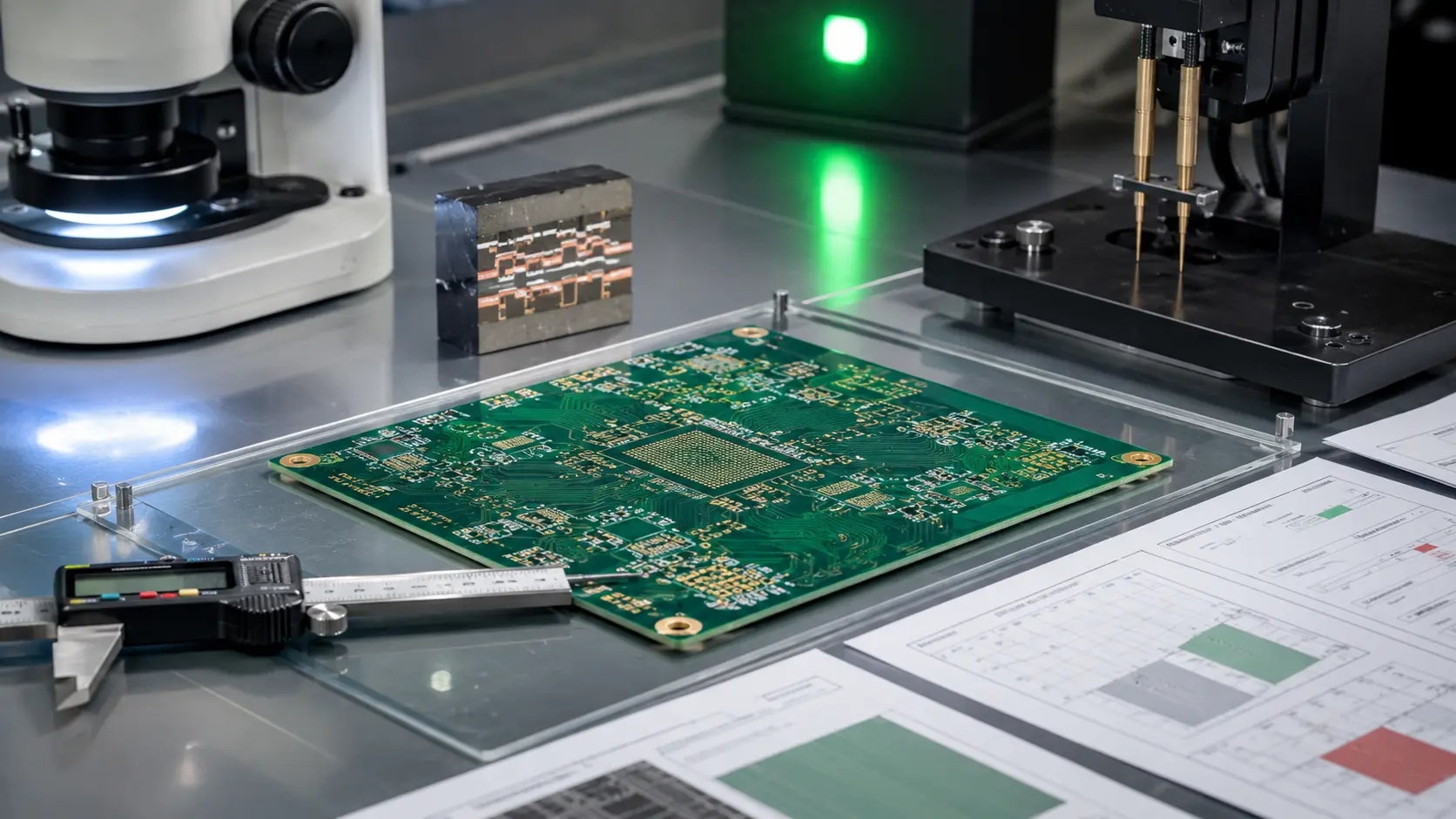
Avoid single-board confidence: One good-looking sample can confirm some observations, but it does not describe variation across a panel or lot. Agree which samples, coupons, reports, and locations represent the characteristics being approved.
3. Confirm Identity and Traceability First
Before measuring dimensions, confirm that the board, report, and released package belong together. Check the part number, revision, panel or piece identification, manufacturing lot reference, and any required date or marking. If marking space is limited, the traceability method can be defined in the drawing or quality agreement rather than improvised on the board.
Photograph the received sample and record which piece was inspected. This is not decorative documentation. It prevents a later dispute in which measurements, microsections, assembly trials, and approved samples refer to different boards.
4. Inspect Mechanical Interfaces, Not Every Dimension Equally
A drawing may contain many dimensions, but not all of them carry the same product risk. Prioritize the board outline, overall thickness, mounting holes, connector locations, slots, edge contacts, press-fit holes, keep-outs, and any feature that mates with an enclosure or another part. Warpage or twist may also matter when the board must pass through assembly fixtures or seat against a thermal surface.
Practical decision: Mark critical-to-fit dimensions in the released drawing before the first build. If every dimension is treated as equally critical, inspection becomes slower without necessarily reducing the most important assembly risk. Discuss unusual limits early with the PCB fabrication team.
5. Check Construction, Holes, and Finished Surfaces
Some characteristics can be seen directly; others need records, measurement, or destructive analysis. Review finished thickness, material designation when required, layer sequence, finished copper expectations, hole size and plating status, board edge, solder mask, legend, and surface finish. For a multilayer design, the approved PCB stack-up should correspond to the sample and its supporting documentation.
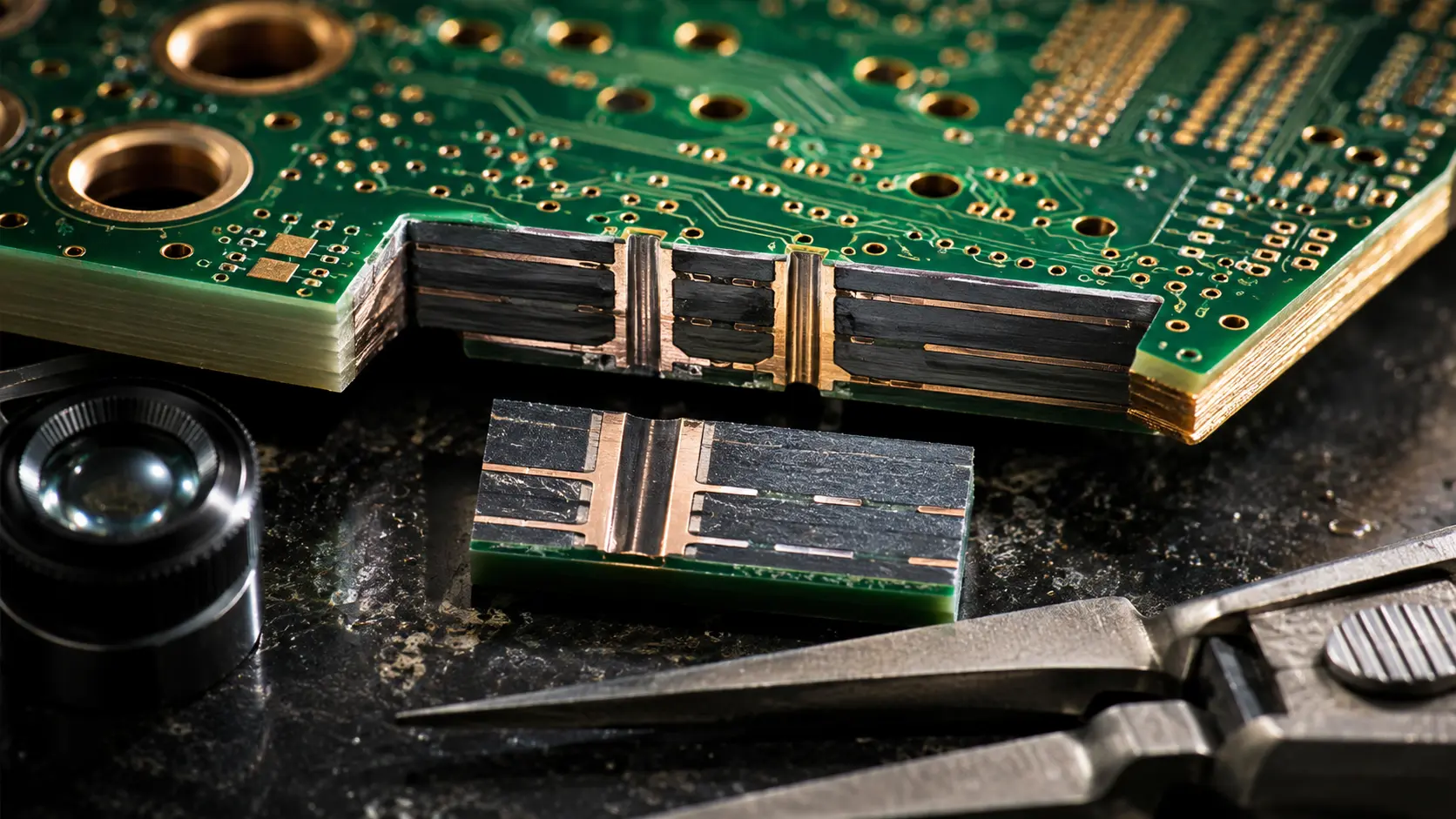
Microsection evidence may be required to evaluate selected internal features such as plated-through-hole structure, layer registration, dielectric spacing, or microvia construction. The location and purpose of the section matter. A section through one coupon does not automatically prove every feature on every production panel.
6. Use Standards as Criteria, Not as a Substitute for the Drawing
IPC describes IPC-A-600 as a resource covering printed-board classifications and acceptance criteria, including externally and internally observable conditions. IPC’s release information for IPC-6012F describes qualification and performance requirements for rigid printed boards across several constructions and technologies.
The applicable document revision, product class, test frequency, customer exceptions, and order-specific requirements should be stated in the procurement documentation. IPC maintains a document revision table that helps confirm current status. Do not write only “build to IPC” and expect that phrase to define every material, dimension, report, or acceptance decision.
7. Match Each Approval Question to Suitable Evidence
No single inspection proves everything. Select evidence according to the requirement and record what remains outside the review scope.
| Evidence method | Useful for | Does not prove by itself |
|---|---|---|
| Visual and dimensional inspection | Outline, holes, markings, mask, finish, visible damage | Internal plating, dielectric structure, circuit function |
| Bare-board electrical test | Continuity and isolation against agreed net data | Mechanical fit, material, solderability, full reliability |
| Microsection or coupon analysis | Selected internal construction and plated features | Every location on every board |
| Impedance result | Specified controlled-impedance structures represented by the method | All signal-integrity behavior of the assembled product |
| Assembly fit trial | Connector, enclosure, fastener, fixture, and component fit | Internal PCB quality or long-term field performance |
The broader PCB manufacturing quality-control plan should define how first-article evidence relates to routine inspection for later lots.
8. Keep Bare-Board Approval Separate From PCBA Validation
A bare PCB can meet its fabrication requirements and still expose a system issue during assembly. Component land patterns, polarity, stencil design, placement data, soldering profile, firmware, and functional behavior belong to the assembly and product-validation scope. If the same first build includes components, identify which findings belong to the board and which belong to the assembly process.
Scope boundary: Passing bare-board electrical test does not equal passing product functional test. Likewise, a working assembled unit does not prove every bare-board construction requirement. Use the appropriate PCBA testing and inspection method for the assembly question.
When fabrication and SMT assembly are supplied together, keep separate evidence records but connect them to the same product revision. This makes corrective action clearer if a fit, soldering, or functional issue appears.
9. Record Deviations Before Approving Repeat Production
A first article may reveal a condition that is usable but different from the released requirement. Do not turn that sample into an informal “golden board” without correcting the documentation. Record the condition, affected requirement, quantity, engineering assessment, disposition, approver, and whether the design or manufacturing package must change.
The decision may be to accept the sample for a limited purpose, rework it, rebuild it, or revise the requirement. The correct choice depends on product risk and contractual requirements. What matters is that repeat production does not rely on an undocumented exception.
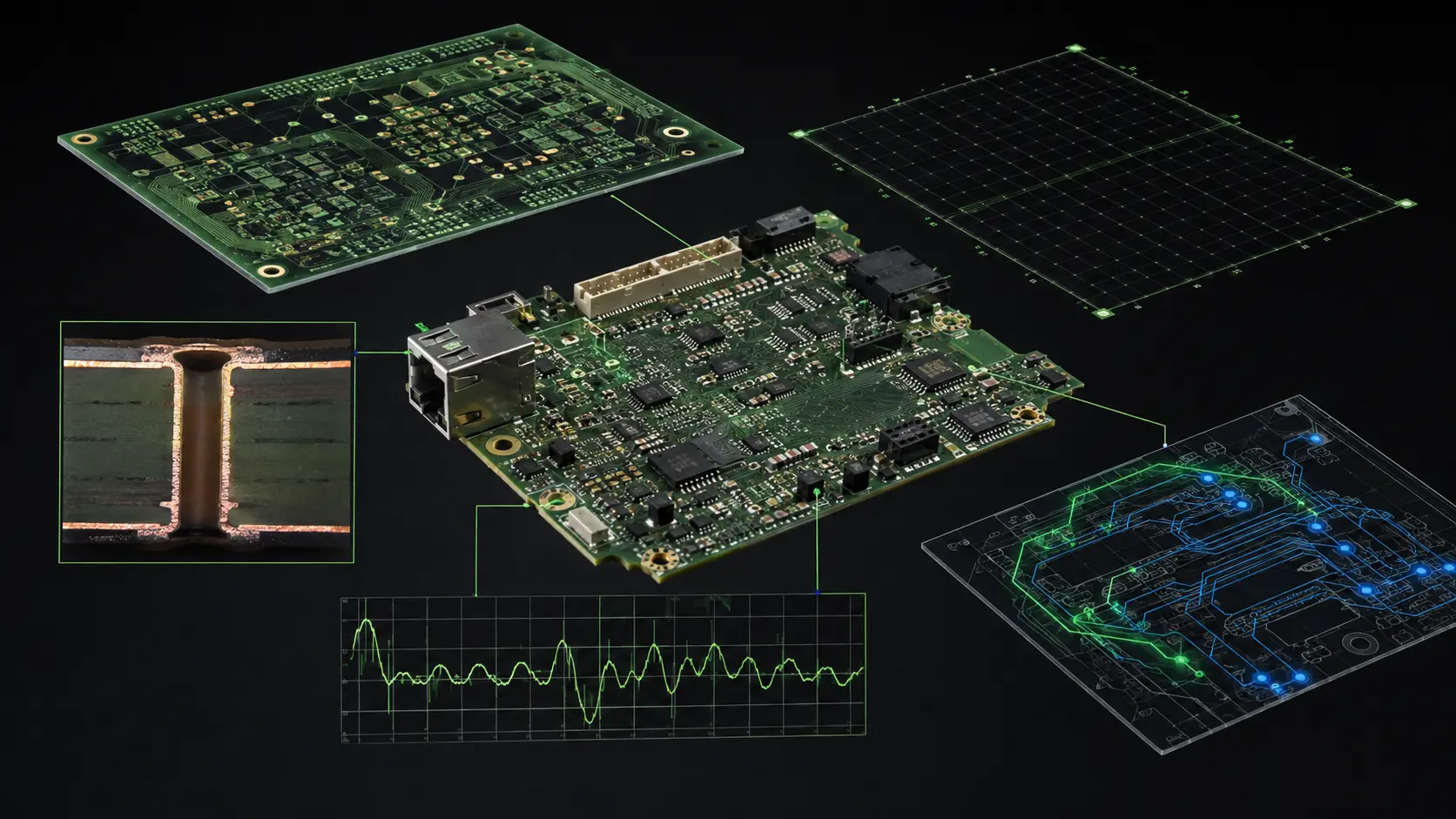
Minimum approval record:
- Product, part number, and revision
- Sample and manufacturing lot identification
- Documents and acceptance criteria reviewed
- Inspection results and supporting report references
- Open deviations, disposition, and responsible approver
- Approval scope: prototype only, repeat order, or volume release
Final Thoughts
First-article approval is strongest when it makes uncertainty visible. It should say what was inspected, what evidence was reviewed, what was not covered, and which revision may proceed. That record is more valuable than a simple “sample looks good” message when the next order is larger or the project returns months later.
EazyPCB supports PCB fabrication, DFM review, prototypes, inspection coordination, SMT assembly, and production. To prepare a first-article review for a new project, contact EazyPCB with the released data, drawing, critical interfaces, required reports, quantity, and intended approval scope.
