
Introduction
Every electronic device you use—from your smartphone and laptop to your coffee maker and car infotainment system—relies on a hidden backbone: the PCB. Short for Printed Circuit Board, PCBs are the unsung heroes of modern electronics, connecting components and enabling devices to function smoothly.
If you’re a beginner in the electronics industry, a hobbyist, or a global electronics buyer looking to understand the basics, this guide is for you. We’ll break down what a PCB is, its main types, why quality matters, and answer common questions—all in simple, professional English.
By the end, you’ll have a clear grasp of PCBs, helping you make informed decisions when sourcing or working with electronic components.
What is PCB?
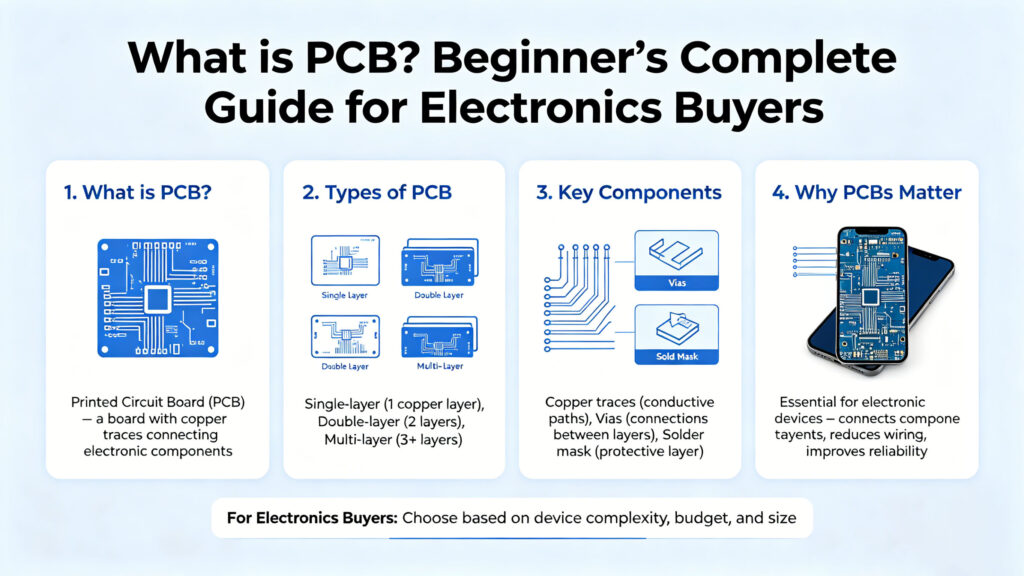
A PCB (Printed Circuit Board) is a thin, flat board made of insulating material (usually fiberglass-reinforced epoxy, known as FR4) with conductive copper pathways printed or etched onto its surface. These pathways—called “traces”—connect electronic components like resistors, capacitors, and chips, allowing electrical current to flow and power the device.
Think of a PCB as the “nervous system” of an electronic device. Without it, components would be loose, wires would be tangled, and devices would be bulky, unreliable, or impossible to manufacture at scale.
PCBs have come a long way since their invention in the early 20th century. What started as simple single-layer boards for military equipment during World War II has evolved into complex, multi-layer designs used in advanced electronics today.
At their core, all PCBs share three key components: a non-conductive substrate (the base), conductive copper traces, and a solder mask (the colored layer, usually green, that protects the traces and prevents short circuits).
Main Types of PCB
PCBs come in several types, each designed for specific uses. The type you choose depends on the complexity of your device, space constraints, and performance needs. Here are the most common types for beginners to know:
1. Single-Layer PCB
The simplest and most affordable type, single-layer PCBs have copper traces on only one side of the substrate. Components are mounted on the opposite side, and there’s no need for holes to connect layers.
Ideal for basic devices like LED lights, calculators, and simple sensors. They’re easy to design, manufacture, and repair—perfect for beginners or low-cost projects.
2. Double-Layer PCB
Double-layer PCBs have copper traces on both sides of the substrate. Small holes called “vias” connect the top and bottom layers, allowing signals to flow between them.
This type is more versatile than single-layer PCBs and works well for moderately complex devices like power supplies, small consumer electronics, and Arduino projects. They balance cost and functionality for many electronics buyers.
3. Multi-Layer PCB
Multi-layer PCBs have three or more conductive layers stacked together, separated by insulating material. They use vias to connect all layers, making them compact and capable of handling complex circuits.
Common in high-end devices like smartphones, laptops, medical equipment, and aerospace technology. While more expensive to manufacture, they offer superior performance and space efficiency for advanced applications.
4. Flexible PCB
Flexible PCBs (or flex PCBs) are made of flexible insulating materials like polyimide. They can bend, twist, or conform to irregular shapes, making them ideal for devices with limited space—such as wearables, smartphone cameras, and car electronics.
A variation called rigid-flex PCBs combines flexible and rigid layers, offering the best of both worlds: flexibility where needed and stability for component mounting.
Why Choose High-Quality PCB
For global electronics buyers, choosing high-quality PCBs isn’t just a “nice-to-have”—it’s a critical decision that impacts your product’s performance, reliability, and reputation. Here’s why quality matters:
First, reliability. Low-quality PCBs often use cheap materials or shoddy manufacturing processes, leading to issues like trace corrosion, poor solder joints, or short circuits. This can cause device malfunctions, customer returns, and costly repairs.
Second, durability. High-quality PCBs are built to withstand harsh conditions—like temperature changes, humidity, and vibration—ensuring your product lasts longer. This is especially important for industrial, automotive, or outdoor electronics.
Third, cost savings. While high-quality PCBs may have a higher upfront cost, they reduce long-term expenses. Low-quality PCBs often lead to production delays, rework, and product recalls—costs that far exceed the initial savings on cheap boards.
Finally, performance. High-quality PCBs have precise trace widths and spacing, reducing signal interference and ensuring consistent electrical performance. This is crucial for sensitive devices like medical equipment or communication tools.
FAQs About PCB (For Beginners)
Here are answers to the most common questions beginners and electronics buyers have about PCBs:
Q1: What materials are PCBs made of?
The most common substrate is FR4 (fiberglass-reinforced epoxy), which is durable, insulating, and affordable. Other materials include polyimide (for flexible PCBs) and aluminum (for high-heat applications like LED lights).
Q2: Can I design my own PCB as a beginner?
Yes! There are free, user-friendly tools like KiCad and Fritzing that let beginners design simple PCBs. Many manufacturers also offer low-cost prototyping services, making it easy to test your design.
Q3: How do I choose the right PCB type for my product?
Start with your device’s complexity: use single-layer for simple projects, double-layer for moderate complexity, and multi-layer for advanced devices. For flexible or compact designs, choose flex or rigid-flex PCBs.
Q4: Are high-quality PCBs worth the extra cost?
Absolutely. High-quality PCBs reduce the risk of device failure, lower long-term costs, and improve customer trust. For commercial products, this investment pays off in fewer returns and a better brand reputation.
Q5: What is the difference between a PCB and a breadboard?
A breadboard is a temporary platform for testing circuits (no soldering required), while a PCB is a permanent, manufactured board for final products. Breadboards are great for prototyping, but PCBs are needed for mass production.
Conclusion
PCBs are the foundation of every electronic device, and understanding their basics is essential for anyone in the electronics industry—especially beginners and global buyers. From single-layer to multi-layer, flexible to rigid, each PCB type serves a unique purpose, and choosing the right one depends on your product’s needs.
Remember: investing in high-quality PCBs is an investment in your product’s reliability, durability, and success. By knowing what a PCB is, its types, and why quality matters, you’ll be able to make informed decisions that benefit your business and customers.
Whether you’re designing a simple hobby project or sourcing components for a commercial product, this guide gives you the basics to get started with PCBs. As you gain experience, you’ll explore more advanced topics—but for now, you have the foundational knowledge to navigate the world of PCBs with confidence.
